


By Ifeoma Ikem
The Assistant Inspector General of Police in charge of the Maritime Command, Chinedu Oko, says the clearing of cargo at Nigerian seaports can never achieve one hundred percent certainty due to the inherent complexities of international trade and port logistics.
Oko, who was represented by DCP Chukwuemeka Obasi, explained that factors such as documentation errors, human influence, and systemic operational gaps make absolute verification of consignments nearly impossible.
He noted that in many cases, the contents of imported consignments differ from what is declared, a situation the Maritime Police often manages discreetly in order to maintain operational stability at the ports.
According to him, the Maritime Police—being a specialised arm of the Nigeria Police Force—plays a vital role in securing maritime assets, preventing cargo-related crimes, combating pilferage, and ensuring the seamless movement of legitimate trade through the ports.
He emphasised that the Police are not revenue collectors but law enforcement agents who operate strictly within regulations guiding the profession.
“Our mandate is not just to enforce the law but also to protect the economic lifeblood of our nation,” he said.
“Nigeria’s competitiveness in the global maritime economy depends on the level of safety, predictability and confidence that stakeholders experience at our ports.”
Oko described the ongoing capacity-building training for maritime officers as timely and strategic, stressing that modern port security extends far beyond traditional policing.
He said port efficiency across the Western and Eastern Commands is linked to how effectively the Police interface with port operators, regulatory agencies, terminal managers, freight forwarders, shipping companies and other supply-chain actors.
Nigeria’s prolonged cargo clearance timelines—often far exceeding the six-hour to seven-day turnaround achievable in some African countries—continue to increase the cost of doing business and place pressure on port users.
In response, the Nigerian Shippers’ Council (NSC) and the Maritime Police Command have intensified collaboration to address human-induced delays and improve overall port efficiency.
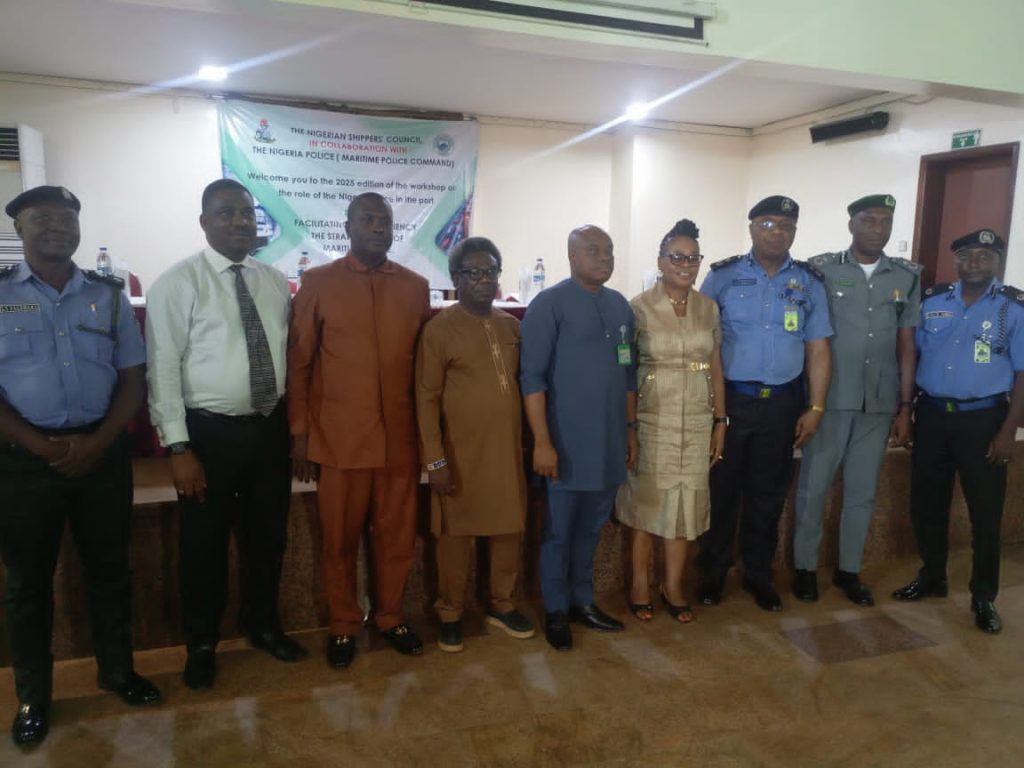
Speaking at a workshop in Apapa, Lagos, themed “Facilitating Port Efficiency: The Strategic Role of the Police,” NSC Executive Secretary, Dr. Pius Akutah, highlighted the importance of the Maritime Police in facilitating trade and ensuring minimal interference in the cargo clearance process.
He noted that since NSC’s designation as the Port Economic Regulator, its partnership with the Maritime Police has focused on strengthening officers’ capacity to execute their statutory responsibilities within the maritime ecosystem.
Representing the NSC Executive Secretary, Mrs. Margaret Ogbonnah, Director of Regulatory Services, said disruptions such as unsolicited detention orders and intimidation at port terminals continue to undermine efforts to reduce cargo dwell time.
She added that many of these actions occur without the knowledge of senior police authorities, resulting in extended demurrage, storage charges, and unnecessary bottlenecks.
Ogbonnah disclosed that following consultations with the Inspector General of Police, new directives have been issued to streamline police operations at the ports and disregard unauthorised communication that orders container detentions.
She said the current priority is the comprehensive training of maritime police officers to align with international best practices and enhance Nigeria’s port competitiveness.
Stakeholders at the workshop advocated deeper collaboration between the NSC and the Maritime Police to reduce cargo clearance delays, enhance trade facilitation, and lower business costs at Nigerian ports.
They also suggested the adoption of joint container examinations to curb delays and strengthen transparency in the clearing process.
