


By Ifeoma Ikem
The Secretary-General of the International Maritime Organization (IMO), Mr. Arsenio Domínguez, has commended Nigeria’s Deep Blue Project, describing it as one of the most outstanding maritime security initiatives in the world.
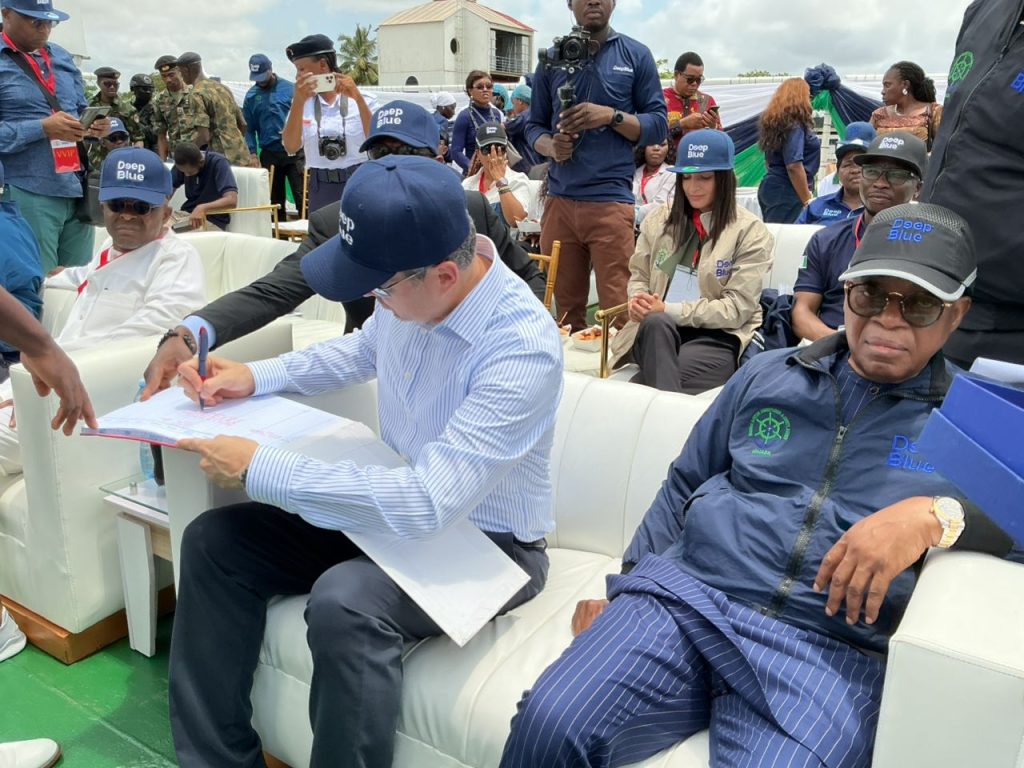
Mr. Domínguez made the remarks during his three-day official visit to Nigeria, which included a tour of the operational base of the Nigerian Maritime Administration and Safety Agency (NIMASA) at the Nigerian Navy Underwater Jetty, Ojo, Lagos.
Speaking alongside the Minister of Marine and Blue Economy, Mr. Adegboyega Oyetola, the IMO Secretary-General said the project had demonstrated Nigeria’s commitment to maritime safety and regional stability
.
“Maritime security is critically important for Nigeria and the Gulf of Guinea, and the results speak for themselves,” The impact is clear — improved security supports the economy, trade, and the confidence of the international maritime community.”
Domínguez noted that the Deep Blue Project represents a model of inter-agency collaboration that other maritime nations can emulate.
He described the coordination between the Navy, Air Force, and other security agencies as exemplary.
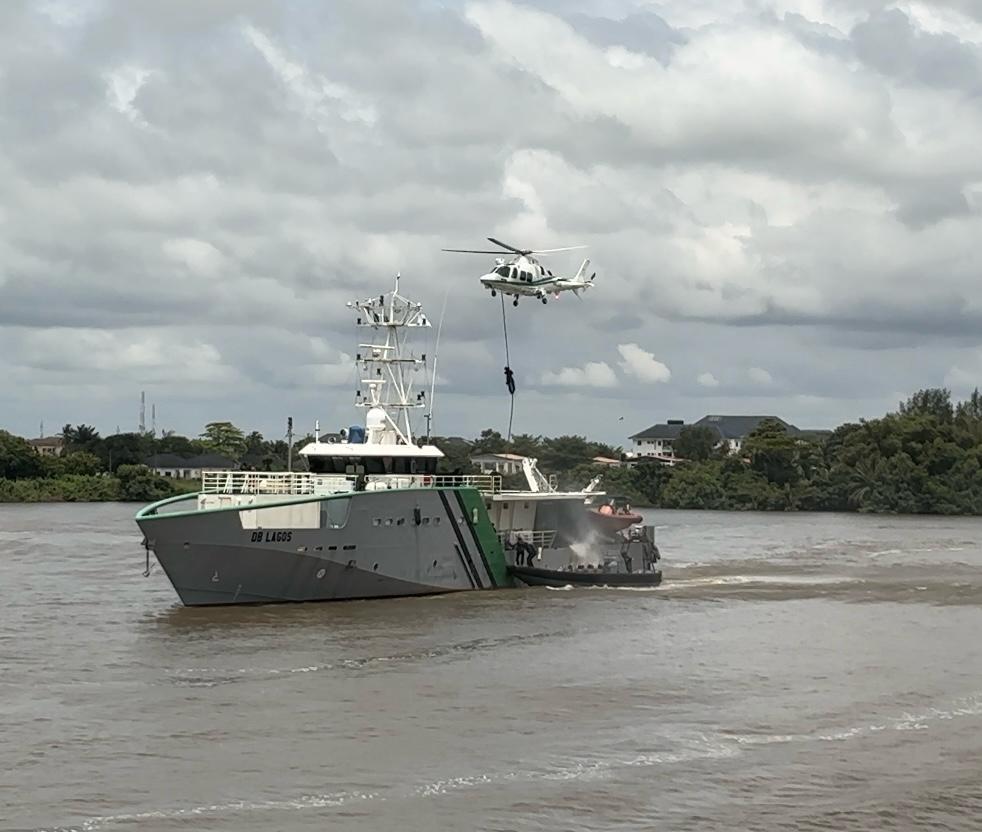
The Deep Blue Project, led by NIMASA, integrates air, land, and sea assets with intelligence operations to combat piracy, illegal fishing, smuggling, and other maritime crimes
.
The initiative has been credited with achieving zero piracy incidents in Nigeria’s territorial waters in the past three years.
Minister Oyetola said the project had proven Nigeria’s ability to safeguard its maritime domain while aligning with international security standards.
“I must commend the various agencies, particularly the security agencies, for their collaboration. This shows that with teamwork, nothing is impossible,” the minister said. “Funding may be tough, but the Federal Government remains committed to ensuring that our waters remain piracy-free.”
He added that the success of the Deep Blue Project would enhance Nigeria’s chances as it seeks re-election into the IMO Council, the organization’s top decision-making body.
“With this progress, we can present a strong case for Nigeria’s election to the IMO Council. Our goal is to strengthen Nigeria’s voice in shaping global maritime policy,” Oyetola said.
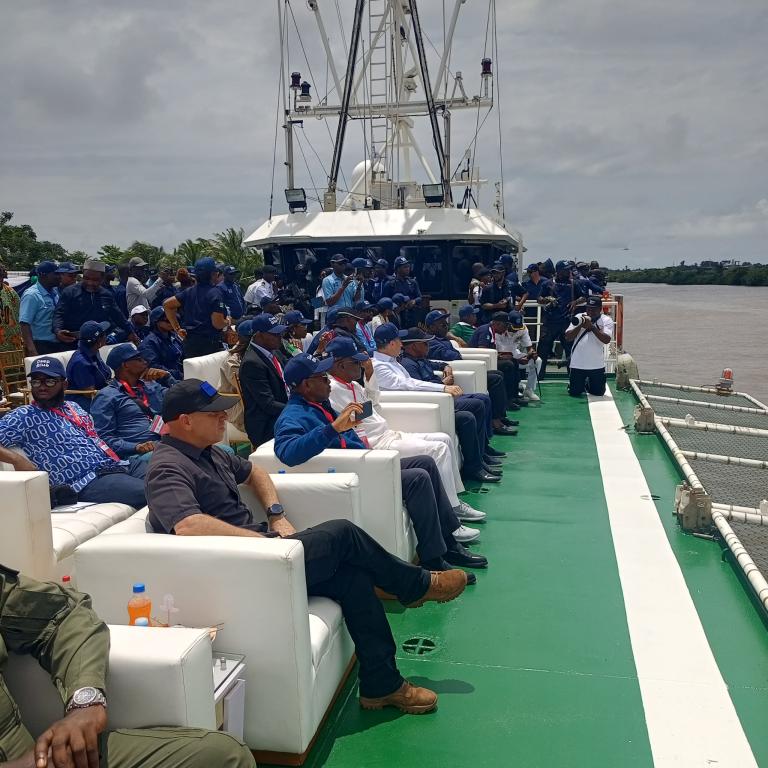
After touring the project’s facilities, Mr. Domínguez lauded the sophistication of NIMASA’s operational equipment and the professionalism of its personnel.
“They are fully equipped and professionally operated,” he observed. “The demonstrations I witnessed prove that Nigeria has the right tools and the right people to ensure maritime safety.”
In a lighthearted moment, the IMO chief shared that he had earned a local nickname during his visit. “I’ve been called ‘Segun Domínguez’ here,” he said with a smile, adding that he looked forward to tasting Nigeria’s famous local rice dishes.
Domínguez also expressed confidence in Nigeria’s campaign for re-election to the IMO Council, commending the country’s leadership in maritime safety and regional cooperation.
To round off the visit, NIMASA’s Special Forces staged a live tactical demonstration showcasing their rapid threat detection, vessel boarding, and synchronized response capabilities under the Deep Blue Project.
With the Deep Blue Project earning international recognition, stakeholders agree that sustaining the initiative will be vital to consolidating Nigeria’s maritime leadership within the IMO and ensuring lasting peace and security across the Gulf of Guinea.
