


By Tricia Ikem
Students from the University of Ghana and the University of Lagos went head-to-head in a thrilling intellectual contest at the inaugural Inter-University Africa Debate, a flagship event of the disruptED Summit, held at the University of Lagos Auditorium on Thursday. The debate, which drew over 300 students and volunteers, aimed to amplify youth voices in shaping Africa’s economic and policy discourse.
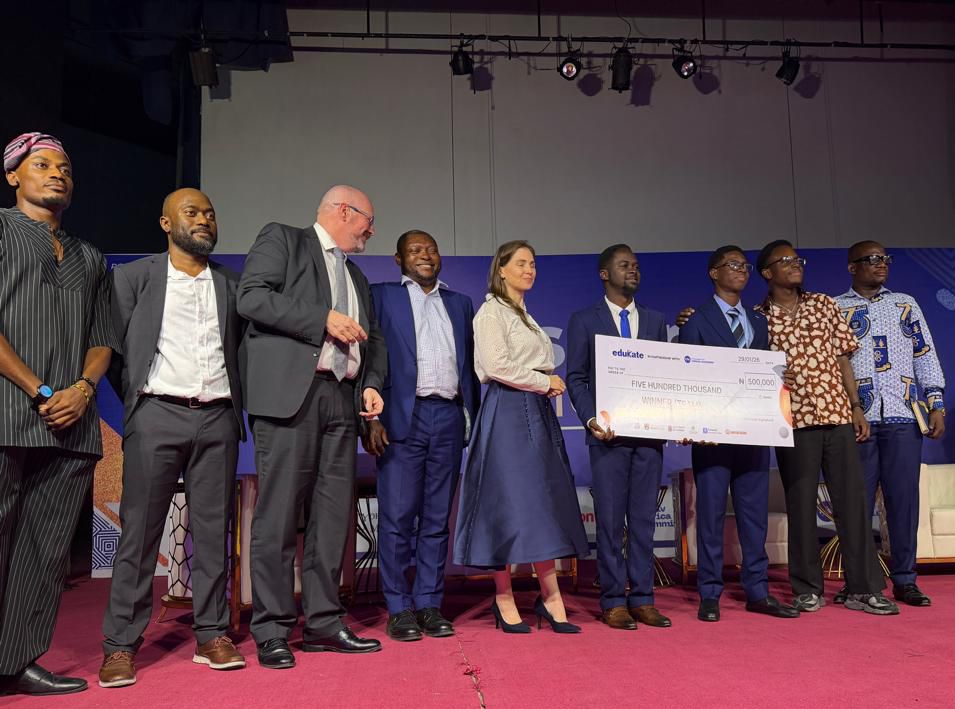
After eight intense rounds of argument, rebuttal, and audience engagement, the University of Ghana emerged victorious, demonstrating depth of research, clarity of argument, and persuasive skill. Judges described the contest as one of the most intellectually rigorous student exchanges they had witnessed. Team Ghana took home a cash prize of N500,000, while Nigeria’s team received N300,000. The Best Debater of the event was also rewarded with N150,000 for outstanding performance.
Luke Wales, Director of Global Relations and Education at the University of Birmingham, representing Vice-Chancellor Professor Adam Tickell, said:
“The intellectual standard of this debate was extraordinary. After each round, the judging panel found ourselves reconsidering our positions. The students demonstrated not just preparation, but genuine persuasive skill and analytical depth. It was a powerful reminder of the talent and intellectual energy present in African universities.”
Moderated by Tosin Adebisi, founder of the Programme for African Leadership (PfAL) at the London School of Economics, the debate invited students to confront complex global frameworks such as the Washington and Beijing Consensus, fostering participatory learning rather than passive spectatorship.
Tosin Adebisi emphasized the transformative purpose of the exercise:
“This debate is about more than winning arguments. It’s about training a generation of young Africans to think critically about the systems they are entering and the futures they are building. When students research global economic frameworks in real time and challenge each other at this level, you see confidence forming. You see agency. That’s the foundation of leadership.”
The event also highlighted homegrown innovation. Students from UNILAG presented two major projects: Project Green Dream, aimed at reducing Nigeria’s annual tomato waste of 32 billion kilograms by converting them into flakes for year-round availability, and NAPTCHA, an environmental solution targeting pollution in coastal cities to protect aquatic life, generate jobs, and boost the economy.
“Today, we present to you two of our projects, Green Dream and NAPTCHA. Environmental pollution is a rapidly growing challenge globally, most especially in coastal areas. Our innovative solutions tackle waste accumulation while generating energy and nutrients for communities,” the UNILAG students said.
Judged by Oluwatobi Oseni, Muhammad Abduliahi, Chibuike Echechi, Alfred Ashopa, and Prof. Olufemi Olayemi, the competition underscored the growing importance of youth-led, policy-focused debates on the continent. Organizers intend for the debate to evolve into a national and continental series, fostering leadership, critical thinking, and visibility of youth perspectives in policy decision-making.
An attendee captured the sentiment of many:
“This is the first time I’ve seen students treated as participants in policy, not just observers.”
The disruptED Summit, which brought together educators, tech experts, and policymakers, continues to position students at the centre of discussions on Africa’s education, skills gaps, and future-of-work innovations, reinforcing the critical role of youth in shaping the continent’s policy and development trajectory.
